Turning Europe’s Digital Laws into a Growth Driver: Simplifying DMA and DSA

Input
Modified
Strong laws; complex compliance stalls EU growth
Simplify: one rulebook, one portal, safe patterns
Tie public compute to pre-cleared controls; update annually

EU’s digital rules now have teeth. The European Commission fined Apple €500 million and Meta €200 million under the Digital Markets Act (DMA) in April 2025. This showed commitment, but also showed a deeper issue. While the rules are being enforced, the money and tech power needed to grow European companies have gone elsewhere. In 2023, the U.S. received about €62.5 billion in AI investments, while the EU and the UK together received only about €9 billion. This gap is huge. The U.S. also made more of the best AI models, almost three times as many as the EU in 2023. If Europe doesn’t turn these rules into a chance for innovation, it will fall behind. That’s why simplifying the DMA and DSA is essential. It’s not about giving up on rights or fair competition, but rewriting the rules to help European companies succeed.
Why Protecting DMA and DSA Matters
The DMA limits gatekeepers, such as app stores, search engines, social networks, and ad services. It sets rules against favoring their services and blocking other services, with fines up to 10% of their global sales (20% for repeat offenses). The system is now running: the Commission has named the gatekeepers for 23 services, added Apple’s iPadOS, included Booking.com, and removed Facebook Marketplace. This is a way to encourage competition and fix issues quickly.
The Digital Services Act (DSA) works with the DMA. It covers online services, with stricter rules for huge platforms and search engines with over 45 million users. These must check and reduce risks, share data with researchers, and may be fined up to 6% of global sales if not compliant. The DSA is in effect: extensive service rules took effect in 2023, and the entire framework has applied to all platforms since February 17, 2024. The aim is to protect users, make things open, and encourage safer, fairer online markets.
This base shouldn’t be weakened, but it does need to be made easier to use. European companies, mainly smaller firms that aren’t gatekeepers but still face many rules, need to understand, follow, and comply with them promptly. The idea is simple: keep the goals, but make the process easier.
The Need to Simplify DMA and DSA
Europe’s problem is shown in the numbers. In 2023, the U.S. had €62.5 billion in AI investments, China had about €7.3 billion, but the EU and UK together had only €9 billion. In 2024, U.S. AI investment rose to around $109 billion, widening the gap even further. The U.S. also made more of the leading AI models in 2023. These numbers mean bigger labs, faster progress, and greater tech power, which attract talent and customers.

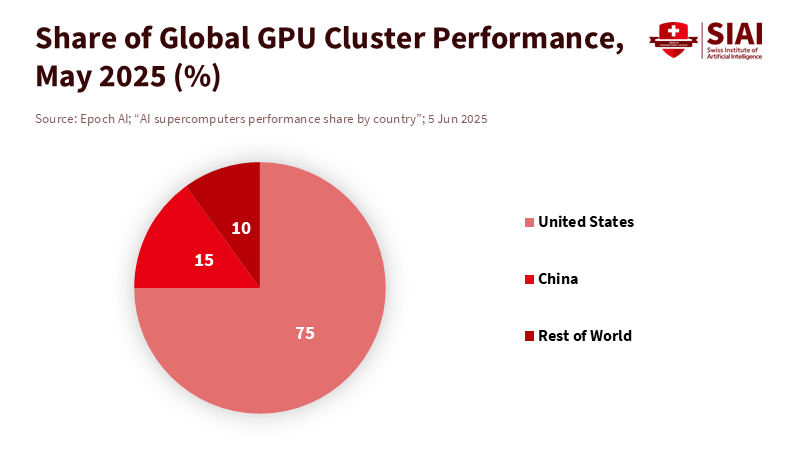
Looking at computing power, by mid-2025, about three-quarters of the world’s best computer processors were in the U.S., with China second and Europe behind. Europe has great public computers, like the EuroHPC LUMI system, but the private computers that power today’s AI model training are mainly outside the EU. If European business owners spend time trying to understand complex rules while their competitors train larger models on cheaper computers, they will fall behind. This isn’t against enforcing the rules; it's about implementing them in a way that saves time.
The Commission recognizes that complex rules are a problem. The November 2025 plan aims to make data, cybersecurity, and parts of the AI Act more straightforward to understand, improve business wallets, and reduce duplicate reports, with potential annual savings of €150 billion. Business groups want simpler and more consistent digital rules. The path is clear: can we simplify DMA and DSA with the same focus?
How to Simplify DMA and DSA Without Losing Rights
Simplifying isn’t the same as removing rules. It’s about making them better. The first step is to consolidate all the instructions into a single guide. Companies now have to deal with many papers, updates, and platform-specific talks. A single, regularly updated DMA-DSA Compliance Manual from the Commission would replace all the separate notices. It would turn legal rules into a clear set of guidelines and goals, such as default browser options, ad rules, and recommender options, so tech teams can build once and reuse. Europe already does this in other areas; using it here would cut costs without changing the goals.
Secondly, connect reporting and proof requirements to the Commission’s single online portal. Redundant reporting wastes money. If companies can file a single report that covers multiple laws, the cost per report decreases. The Digital Package shows how to do this. The DMA and DSA can directly connect to that system. For platforms, that means using one form for risk checks, ad data, and algorithm logs. For the Commission, it means precise, computer-readable data for monitoring. Everyone benefits.
Third, use standard safe patterns. The DSA already suggests using common solutions. The Commission could offer approved designs for everyday tasks, like child-specific settings or ad limits. If a platform uses a Commission-approved design, it is assumed to comply with the law. It isn’t a free pass, but a straightforward way for teams to release features. Industry and civil society have asked for more explicit rules that maintain trust, and pattern libraries help achieve this.
From Hindrance to Help: Making DMA and DSA Simplification Work
Clear enforcement matters. DMA fines for Apple and Meta show action is being taken. Now, make the rules easy for European firms, especially those with few lawyers. Turn rules into checklists with real examples to keep up with updates. Change guidance annually rather than constantly. Compliance should boost company growth, not add costs. Europe is building AI Factories for startups to rent public computing time. The Digital Package suggests data labs and business wallets to reduce international expenses. Link these supports to DMA and DSA readiness. Provide ready-made components that meet requirements. If startups get secure modules that comply with privacy, they spend less time reworking.
Lastly, add simplification to the reviews of both acts. The DSA is already being reviewed; the DMA’s review is due by May 2026. That review should check three things. Do the new guidelines provide the same user protections at a lower cost? Are we making changes on a yearly cycle? And are we lowering the compliance premium that makes EU companies slower than U.S. or Chinese companies? The answer must be based on facts: track how long it takes to ship compliance features, the percentage of legal costs to operating costs, and how users interact with ad tools or default changes. The Commission’s focus is now on fitness checks and consolidation; the DMA-DSA layer should be the leading example of that.
The EU’s digital acts made a statement: one rulebook for a big market, essential rights, and gatekeepers held responsible. But AI investment numbers show that the resources to build at scale are still elsewhere. The solution isn’t to weaken user safety or fair competition. It’s to make the following rules predictable, measurable, and affordable. Put all guidance in one book, route all reporting through one system, offer designs, and link computers and data access to pre-approved controls. If Europe does this, the DMA and DSA will support companies and protect users, open markets, and give builders time and certainty. That’s how a continent grows.
The views expressed in this article are those of the author(s) and do not necessarily reflect the official position of the Swiss Institute of Artificial Intelligence (SIAI) or its affiliates.
References
European Commission. (2024, Feb. 16). Digital Services Act starts applying to all online platforms in the EU.
European Commission. (2024, May 13). DMA designated gatekeepers (updated).
European Commission. (2025, Apr. 23). Commission finds Apple and Meta in breach of the Digital Markets Act (press release PDF).
European Commission. (2025, Nov. 20). Digital Package – FAQs.
European Commission. Digital Markets Act – about the DMA.
European Commission / DG CONNECT. DSA: Very Large Online Platforms and Search Engines.
Epoch AI. (2025, Jun. 5). The US hosts the majority of GPU cluster performance.
European Parliamentary Research Service (EPRS). (2024, Mar.). AI investment: EU and global indicators.
German Marshall Fund of the United States. (2025, Oct. 15). The EU’s Digital Markets Act and Digital Services Act.
Stanford HAI. (2024). AI Index Report – model origins.
Stanford HAI. (2025). AI Index Report – economy (private AI investment 2024).
BusinessEurope. (2025, Jul. 17). Simplifying the EU digital rulebook: Position paper.
DIGITALEUROPE. (2024, Sep. 10). The future of platform regulation: for a more scalable and innovative Europe.





















Comment